
Assignment | Lesson Three | Hospitality as a Key to Collective Healing
July 21, 2026 10:03 PM
Part One:
In your reflection of 200-500 words, consider the following questions:
· How does Thomas Merton's teaching on welcoming the stranger challenge you?
· What does Raimon Panikkar's 'window' reveal about your own perspective?
· What does Audre Lordes invitation to notice anger as a necessary force for healing sit with you?
- Where have you experienced or witnessed genuine hospitality? What made it real?
Part one of the assignment is due August 21.
Part Two:
Respond thoughtfully to the reflections of at least two other classmates on the discussion board. Your responses should be around 100 words and might include:
- Acknowledgment of helpful insights they've shared
- Follow-up questions that deepen the conversation
- Respectful agreement or constructive disagreement with nuance
- Connections between their thoughts and your own experience
Part two of the assignment is due August 22.
To submit your Assignment, please complete both steps below. You must do both for each assignment to receive credit. The content of your reflection should be the same for both steps:
1. Click “Share in Forum” and post your reflection.
2. Click “Upload Assignment” and submit the same reflection as a Doc or PDF file.
Discussion (19)
I love the image of ‘the hermit of Times Square’ from Zilboorg that Pearson lifted up in his writing about Merton’s hospitality. It seems like a counterintuitive example of the ‘borderlands’ experience that Anzaldúa describes. Instead of a borderland between two countries, the cultures are the interior life and the outside world. Yet as Pearson describes Merton was never satisfied with whatever knowledge or spirituality he could accomplish on his own when left to himself. He needed interaction with ‘the other’ to practice the love and mercy that developed in his contemplative life. His understanding that his life as a hermit was for the world is an extraordinary statement - on the surface it seems paradoxical - but the deep love, and wonder, and hospitality toward humanity only gets to bloom and come alive in the presence of others.
This challenges me in a couple of ways - the first is that I would benefit from deeper reflection on the gifts I’m willing to receive in offering true hospitality. Seeing myself as a recipient erodes my own control and sense of hierarchy - which I admit are probably more present within me than I would like. What mercy do I need to receive? What lock upon my own heart needs breaking? The second challenge I see is one of staying grounded in that love - which might indicate I could use more time in contemplation to remember and develop it. I certainly believe in welcoming the stranger and robust, extravagant hospitality - but having the energy and attitude to practice it all the time is something I could work on. I’m not trying to hold myself to the exact same standard as a monk who has the vocation and the time to develop such a beautifully intricate inner life…but I could certainly be more intentional about how I set aside and use time for reflection and prayer that could help me have more genuine borderland experiences of my own.
That may be ‘enough’ writing for a reflection this week, but I just want to add that the collection of these three voices - Pearson/Merton, Lorde, and Panikkar - was really rich and meaningful to me! I need the view from other windows to understand the world, and I need the guidance of people’s anger to recognize where I need to grow and create change. Beautiful meditations!
Sara,
I connect with you and how you reflected on the need to control that often can debilitate our merciful encounter of the other. Perhaps it is my Midwestern mindset, but it can often be challenging to place ourselves in need in hospitality creating a reciprocal relationship--that would call us into vulnerability that many of us are not ready to enter. Your desire to practice contemplation more robustly also resonates, as a mother of two young boys, I find quiet time to contemplate the world rather minimal at this stage of life!
"Seeing myself as a recipient erodes my own control and sense of hierarchy - which I admit are probably more present within me than I would like." I agree it was a rich week of study! Blessed! I usually begin my study later in the week due to my bivocational work schedule, but this week I started it early and so thankful! I appreciated your comment above. Pastors are caregivers, problem solvers, peace makers, and many other things. I think as a profession, it can be difficult to receive the hospitality we desperately need from others because we see others as more needy of it. However, how can we help others if we are in a pitiful shape emotionally or spiritually or physically? It's near impossible. Or, if it's possible, it is not always a sincere act with full spiritual love...maybe more perfunctory. In Dr. Yong's video, he essentially said, "When we for whatever reason cannot be compassionate with someone in the moment, it's important to stop and be compassionate with ourselves for just a moment...asking what am I dealing with that is so overwhelming that I temporarily have no capacity for compassion of another person." Goodness sakes! That hit me between the eyes. Why had I never thought of that on my own? As a control freak (relating to your statement above), I'm utilizing this thought as a ponder point this week.
Sara- Thank you for your reflection. I agree with the awareness of being intentional about hospitality. As an introverted person, I really have to muster up the energy sometimes. Taking time to recharge my "social battery" is so valuable to being ready to jump back into hospitality and intentional connection with people. Thank you for sharing. I also really enjoyed the resources this week.
Caitlin Mason Week #3
So much of Merton’s reflections were about acceptance of self and having radical self-compassion which then is key to accepting others. The writer mentions Sister Joan Chittester’s work on hospitality as well; sharing the opportunity of friendship in the welcome of the stranger opens the world up to so much possibility. I was deeply challenged by this understanding. Reflecting on my own wounds and trauma, I have often found myself judgmental or distrustful of strangers. However, there appears to be a link between welcoming the stranger and healing the broken places as expressed in Pearson’s article. The idea that mercy is received from strangers was a transformative concept, and the act of hospitality appears to be a reciprocal act of such mercy.
Panikkar’s window analogy reminded me of when my faith was blown open by experiencing the story of a Muslim woman living in a refuge camp in the Sahara desert. The faith group I had been a part of at the time came to the camps with the intention of proselytizing. However, it was my faith that was forever changed—for the better—by hearing the story of a Bedouin refuge woman. Like Panikkar, I realized that my window had become very limited, particularly the window I had viewed God through. Through story and relationship, my understanding of God was widened in a way I had not expected. It was a glorious experience of transformation. I experienced the most genuine hospitality through this woman, as she shared the ritual of three rounds of tea as she shared her heroic story. Through her hospitality I was transformed and my heart widened.
Finally, in regard to Audre Lordes article, I very much struggle with this notion of anger as elemental for healing; mostly because anger feels paralyzing and leaves a sense of helplessness on my part. I recall experiencing significant racial tensions when a Womanist theologian was hired at the seminary school I attended. I had a white friend who was told my a womanist theologian that she really did not have the right to be speaking in a Womanist class. As a white female, I still struggle with the work I need to do in order to create more equitable space. I would challenge the notion of anger and wonder if lament would be equally appropriate? I have so much to learn from people that have been marginalized systemically.
Caitlyn, I also wonder if there should be a good balance of both anger and lament. For some people, anger (which I still consider a negative emotion) cannot exist in isolation as I understood Lorde to say hers does; it must be accompanied by revenge, malice, and rancor. Although Lorde made it a point to share that her anger was not hate, can every person walk a tightwire as deftly as she does? Can anger ever be extinguished? Or, does it just continue to smolder for the life of a person? I do not have the same experience as Lourde, so I cannot interpret, infer, or say. But, I am genuinely curious. In 2026 (versus 1976-1984 when these works of Lorde were written), is this genuine anger the fuel that is needed for us to work across political and race and class differences? Or, would the fuel of love in action be enough?
The idea that mercy is received from strangers also touched me. We have no expectations with strangers, so kindness from them seems “extra” human. There have been a few strangers that have touched me in ways that were surprising. Several years ago, I was housesitting in a different city when a snow storm knocked out the electricity. After 6 days, a friend of the house-owner picked me up (and my dog) and took me to use the shower at her house showing me extreme hospitality. It was a little hard to accept as I didn’t know her, and could offer her nothing in return. … but it was possibly one of the best showers I’ve ever had.
Thank you, Caitlin. I also struggle with the thought of anger as healing. I can see it for others, but the actual action of it within myself is a challenge. I suppose looking back on times when I had to work through the anger I can see that it lead to healing, but I can say that while I was in it, there was no way that I thought of it in the manner of which Lordes was writing about. As I get older, I feel a bit more aware of these things and see that there are purposes for so much that I didn't see before. This is one that I'm going to have to spend more time on.
There is a desire to connect with others and to be authentic with everyone I meet… but the reality finds me lacking… The first video this week, introduced the three “R’s”: Recognize Gods Belovedness, Make Room for Real Encounters, and Be Renewed. As I moved through our three focus voices, these concepts were at the forefront and I found them challenging in how I’m living my life.
Merton’s work reminded me of an encounter I had while working at the Indiana Women’s Prison. An incarcerated woman said to me, “I feel sorry for people outside. You don’t ever have the time to work on yourself”. My current schedule often has me rushing from one job to the next. I realized that as I’m gathering up my belongings, I’m not really giving my attention to others. I’m self-focused and far from seeing others as someone God loves and cares about.
If then I’m not connecting with others in a meaningful way, there is no room for real encounters. Panikkar emphasizes the need for other perspectives to see the whole picture. My perspective is limited - limited by my social location, experiences, past, family etc. We all need others to expand our viewpoint for without that expansion, there will be no growth or connection.
This all includes listening to everyone. There is so much beneath anger: hurt, rejection, fear, exhaustion etc. As Lordes emphasized, we can learn from others by listening and having real encounters. We can see a depth of experience that is different than our own… which will change us.
For me, this week has been challenging as to how I want to move in the world, and I’ve been considering what I can do to allow more connection with others in a true way. I realize that I need to slow down, inside and outs and remind myself that this person before me is loved by God and has valuable experiences to share. It’s a humbling exercise to realize that my “rushing off” is not as important as the person right in front of me.
@kateayers2230
I did not notice prior to your post the interdependency of the three R's that really speaks to me. There is clearly a sense of reciprocity between these three things; we must recognize God's belovedness not just in the other, but also within ourselves in order for the other two R's to make impact. We cannot make room without recognizing room needed for ourselves, and we cannot find renewal without the reality of recognizing the belovedness of the other. I think in the reciprocity exchanged between acknowledging belovedness of both people in the encounter, the mercy Merton speaks of is found in the space made. Encounters of hospitality are a recipricol act in and of itself--almost trinitarian incarnate some might say!
Hi Kate
Thanks for lifting up the three R's from the first video. Seeing them in 'print' or on the screen is helping them stand out more to me. Especially in a week with layer upon layer of meaningful content, I'd hate for this piece to get lost! And I'm also struck, like Caitlin, by the ways each part works together with the others...I wonder: if each R was a circle in an overlapping venn diagram, what would exist in the middle of Recognize, Making Room, and Renewal? Would it be joy? or growth? or maybe transformation or incarnation. Hmm. I'll be thinking about that.
I feel like I could spend more time learning about Merton and being amazed, inspired, and completely confused all at the same time. The concepts in which he believed in and wrote about have given me some enlightened moments. My challenge this week was when I imagined myself doing what he did with his time in the monastery and as a hermit. His time alone actually grew his love, compassion, and hospitality for everyone. That contemplative work is something that will be a lifelong project for me. I can see how he first needed to start with himself and also realized that his view of others was shaped by those he spent time with. So many of my views come from my formative relationships. Merton had to go in to come out and see the world through the love he found for himself.
Panikkar’s window analogy was so well explained. The past few years I have become more aware of how we all have our own lenses but the way Pannikar brought it all together to say that we need to hear what other’s views are through their windows and share what we see through our own windows was such a great way to visualize and understand how all of our views and experiences and lenses are part of one world and how we all have our own truths that can only be seen through our own windows, but can be shared and heard through others. It’s the hearing and listening part that is the challenge. I think I will probably be finding myself sharing The Window with others in my life.
We had a pastor at our church who served our church for 52 years. When he passed away, and we all shared our stories about why he was so special to us, there was a commonality to all of our stories. He met people where they were. He didn’t just see where they were, or hear where they were, but he met them there. Meeting someone where they are in life at any particular moment means that you’re there with them, fully and engaged. You might not like it there, but you are there, and you can share in conversation for better understanding. That’s hospitality to me. It’s not always easy, but once you’re there, it’s so much more freeing and fulfilling than the other option!
I, too, found Panikkar’s analogy clear and helpful. There is something about sharing our own view with someone and being heard that is validating. I was challenged then with the second part of really listening to someone else in a way that was beyond just being polite. To really hear someone and to take in their experience can widen understanding about the world and ultimately God and God’s presence in all of our lives. It is something that I need to work on which leads me back to being authentic with others. This was a really rich week.
Hi Erin-
I think I'll be going back to revisit Panikkar's window too. It's such a 'simple' metaphor, but it keeps growing and expanding with new meaning as he continues speaking in the video. I especially like how it demonstrates how dependent we are on one another to see a fuller picture of anything. It's not just polite to try to see someone else's perspective. It's really necessary to keep seeking other people's views in order to grasp more than the .01% your own window looks out upon. And what a waste to go through life without ever expanding your vision! There's something beautiful about depending upon one another for a richer, more vibrant experience of life.
Erin- I completely agree about Pannikar's description of the "window". I have come to understand people's various outlooks and paradims, but this seemed like such a concrete way to explain it to others. I can't wait to use it in my discussions iwth others.
DSF CAW Wk3
Erin Aylor
August 22nd, 2026
How does Thomas Merton’s teaching on welcoming the stranger challenge you? My first thought was the interesting juxtaposition of him wanting to go live alone but then also welcoming in a steady stream of visitors! But, as Dr. Yong mentioned in his video about folks flocking to the local monastery/abbey during chaotic times to find a quiet peaceful place, possibly this was the case with Merton. To me, Merton’s life reflected a willingness to be apart from people in order to love them more. My educational background is in FACS Education and Dietetics…truly a degree in a form of Hospitality! It’s all about leaning in! But yet, Merton showed that it can be about leaning out as well. Oddly enough, he gave himself space to love people more, and it sounded like an unintended consequence. Hospitality and compassion go hand in hand, especially through our Christian perspective and personal journeys of holiness. Just as was shared about how not showing hospitality to strangers in a desert could lead to actual physical death, we must consider that perspective as we share hospitality with others (care, love, concern, prayer, discipleship, food, clothing, connection to resources, etc.). Often a low importance or value is placed on genuine hospitality, yet we never know when our acts of love being the hands and feet or ears of Jesus Christ could keep someone from going over the edge.
What does Raimon Panikka’s ‘window’ reveal about your own perspectives? I think each of us are prone to believe that our perceptions and perspectives are the only accurate ones that exist. But, we are wise to realize that is not the case. As an educator, we focus on remembering “background knowledge” that students bring into any new learning situation. Those with more background knowledge will have an easier time seeing and understanding concepts being taught vs those with none. We have to be cognizant of that. Additionally, the quality of the background knowledge varies immensely…similar to if one is looking through a dirty or clouded window vs a sparkling clean one. It’s about honoring not only what the other person sees but to me also the background of why…why is their window cloudy?
What does Audre Lordes invitation to notice anger as a necessary force for healing mean to you?
“The angers between women will not kill us if we can articulate them with precision, if we listen to the content of what is said with at least as much intensity as we defend ourselves against the manner of saying. When we turn from anger we turn from insight, saying we will accept only the designs already known, deadly and safely familiar. I have tried to learn my anger's usefulness to me, as well as its limitations.” There were many good points of this work, but noted here is one that is succinct. It was galling and hard to read the instance of her being essentially pushed aside when sharing her thoughts at that conference! “This hatred and our anger are very different. Hatred is the fury of those who do not share our goals, and its object is death and destruction. Anger is a grief of distortions between peers, and its object is change.” I didn’t read explicitly where she said, “Use anger to bring about the positive,” but she did mention in multiple ways utilizing her anger to promote positive change. I’ve downloaded this article to use later. I’d never heard or thought of feminine Black anger from this perspective.
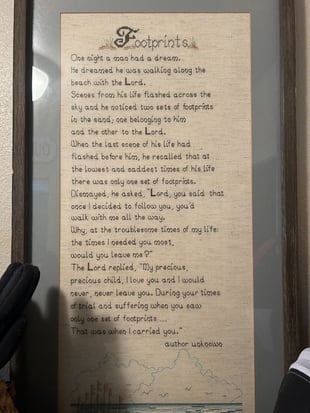
Where have you experienced or witnessed genuine hospitality? What made it real? I just celebrated 32 years of marriage last month! Praise God! But, back in 1997, I was in college and my husband and I were going through a rough patch. As in, I was considering divorce and was squirreling away money in my glovebox to move or whatever I needed to do but had not told him that. There was a fellow student in one of my FACS classes who was non-traditional and gay. At this time, I was still Missionary Baptist. I had never had a gay friend before her. We were talking over lunch in the student lounge, and I told her about my situation and not being sure what I was going to do. She offered to let me have a room in her and her girlfriend’s home right there close to college with no strings attached and no rent to have to pay. I was driving ~50 minutes from my home as a commuter student. Honestly, we barely knew each other, but here she was offering genuine hospitality, holding a place for me in my season of pain, not asking for details or being judgemental. As a side note, during my last year of college, the FACS was redoing the student lounge, and there was a cross-stitch Footprints in the Sand that this friend had done on the wall. All decor was being junked for the remodel, so I took it. It has hung in my home for the past 27 years. This is the first time I’ve ever shared this story of her radical hospitality with anyone. I honor her here today.
Erin,
Thank you for sharing this beautiful story, though I am sure it is reflective of a painful time in your life, what silver lining this classmate offered you with their hospitality.
I think you hit the nail on the head connecting the anger that Lordes shares being tied to a sense of grief. I have always thought of anger as a secondary emotion of something going on at a deep level; it's a reaction to something--in this case a long systemic oppression that must feel unimaginable in the body. I have often struggled with how to make anger constructive. The emotion itself holds such great energy that the potential for transformation seems integral to its expression.
Erin, thank you for sharing such a personal story. And happy anniversary to you! I was touched by the generosity you received; however, I feel that in that moment, you had to open your heart to receive it. It's beautiful on both sides. I really love that you have a memory of her that hangs on your wall for you to see every day. It's actually perfect!
My apologies for the late response this week. Life got a little hectic -Max
The biggest challenge I had with the Merton writing came around his statement that we "must live at peace with [ones'] brother". I believe that we should aspire to peace, but I'm not always sure that I want to be at peace with every single person I encounter, especially when their beliefs and values would discriminate against other communities. So I'm trying to wrestle with how you acheive a sense of peace with people who don't desire peace for you or your loved ones. Perhaps Lorde's response would be "righteous anger", but not hatred.
I appreciated Lorde's description of anger and that, "focused with precision, anger can become a powerful source of energy serving progress and change" (Lorde) There used to be times that, as a white person, I used to bristle at the "anger". I knew it wasn't direct at me individually, but I didn't know what to do with it. As I've been more involved with social justice movements in the areas of womens rights, racial issues, LGBTQ+ advocacy, I realize that that anger is focused on drawing out change. So one of the ways that I can help is to listen to that anger, understand what is being said, and help amplify those voices. I don't have the first hand experience of other women, of racial minorities, of queer people, but I need to listen to "hear a description of what [they] see through their window" as Panikkar said. I'm not bothered by the anger anymore, and now I can actually join in a righteous anger about things that need change. I have blind spots from my location, and I can't fully understand the challenges affecting some other people, so it's important to really listen and honor their experiences.
It seems to me that this weeks' readings focus on hospitality as an honest and open presence, where voices, perspectives, challenges, and personal truth telling is necessary and welcomed. When I think about that, the example that stands out the most to me was during a vigil for the 2016 Pulse nightclub shooting. Many people in our community showed up at the Maltese, a now defunct bar in Chico, for a night of music, commemoration, and rememberance of the vicitims of that shooting. It was such a unique night, because everyone there was in solidarity. As a straight man, I was embraced with everyone else to pay respects to people who were victims of hate. There were people laughing, crying, just in circles huddled sharing space together. It felt like everyone was in a safe space to be themselves, be honest, and open with their expressions of friendship and grief. I wish that it hadn't been a necessity as a result of a mass tragedy, but what if we could all live like that every day. A place without judgement, where crying, hugging, and time spent together could be shared. What if our church fellowship times were all as full of joy and suffering, or or communion tables as diverse and welcoming?